Introduction:
How we do anything is how we do everything. Thus, my business philosophy mirrors my life philosophy, which is inspired by mentors near and far. Distant mentors and muses inspire my abstract values and desires. While nearby mentors, like friends and family, provide the ability to contextualize my beliefs.
I believe the best business advice comes from obscure experiences; after all, how we do anything is how we do everything. My understanding of what a meeting should look like has been shaped by my many “failed” iterations.
I do find that meetings only have value when there is a clear understanding of what is to be expected within the meeting. This brief essay will explain my preferred meeting structure.
My First Meeting:
There is a famous saying that “you never forget your first.” That proved true for my first business meeting. I hosted a client virtually which ultimately concluded with an application being written. Looking back, it is a miracle I still am confident in the result. We concluded with the optimal payoffs for both myself and this blessed lady who trusted a 21-year-old to teach her about Medicare insurance. My two momentum-building takeaways from this experience were realized after some time and reflection.
Preparation is incredibly important, even though it does not produce certainty. Even if it was more about memorization than understanding, I was able to communicate effectively, thanks to my preparation. I also realized in this meeting that through transparency, intentionality, and focus, both my client and I were able to achieve a positive outcome.
My client entered the meeting with a desire to acquire insurance; I entered the meeting with a desire to generate income and gain experience. We shared our ideas and interests until, ultimately, we reached a conclusion that mutually benefited us both. An objective truth was revealed: business transactions can result in positive outcomes for all parties involved.
How My Approach Changed:
Some minds gauge expertise by measuring the time allocated to a specific endeavor. I gauge it by measuring the number of failed iterations someone has who is still iterating. My first meeting provided me only one experience to draw from, but by the time I hosted my hundredth, I was learning from my first experience in ways I never had. This exemplifies the power of compounding, and proved to me that experience ousts theory.
A War of Ideas:
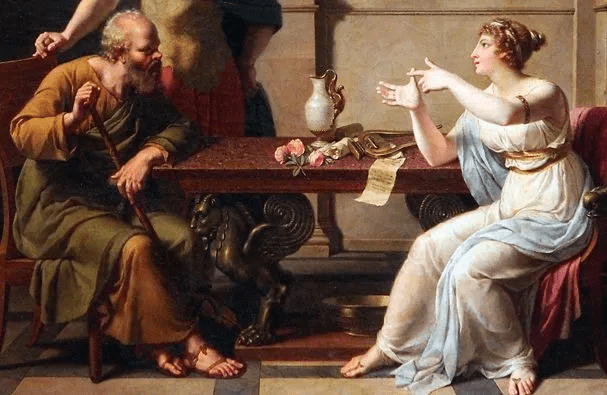
My current description of a meeting with me was lifted directly from one of my distant mentors, a gentleman named Karl Popper. I stumbled upon an excerpt from one of Popper’s works in which he was discussing the power of discussion. Popper’s book, Conjectures and Refutations, is about the advancement of knowledge and this idea has reshaped my meeting structure:
“The war of ideas is a Greek invention. It is one of the most important inventions ever made. Indeed, the possibility of fighting with words and ideas instead of fighting with swords is the very basis of our civilization, and especially of all its legal and parliamentary institutions.”
The concept is simple: rather than use physical force to acquire a desired outcome, the Greeks decided to battle using logic, knowing the war was over when no idea can challenge the validity of the victorious conjecture.
This idea and how it translates to a retirement meeting in the modern world, comes with a very important caveat. It must be understood that a victorious idea has won the battle but can never win the war. Whichever outcome we reach at the end of the meeting, we should begin questioning the validity of that outcome immediately following the meeting.
This might cause you to wonder if working with me is in your best interest. After all, what advisor wants you to leave a meeting with a desire to challenge the plan that we just put into place? If you are considering making retirement decisions, examine the structure of a meeting with me below.
A Meeting:
A meeting with Dylan is a war of ideas. When you enter the battlefield (my office), I expect you to wield your sword (articulate yourself) to slay our opposition (create a new strategy).
Rules of War:
With the intention of creating a strategy that you are confident with, we must deliberately consider every aspect of your well-being. Before doing that, we must verify that we are fit to be allies in your pursuit. Trust and reliability are attributes that seldom materialize with ease. Outlining our “Rules of War” is the first act we will take.
This will be done by reading disclaimers, explaining policy, and sharing preferences. I am incredibly bored by contractual language, but the value of this is significant. We must carefully outline where each of our interests lies so that we understand how we can position ourselves to support an alliance.
Assessing the Armory:
Once we have laid out framework for what we would like to accomplish and addressed what opportunities we have in front of us, then we begin taking inventory. This can be a difficult place to start because honesty sometimes introduces vulnerability. All meeting participants must clearly inform each other of their capabilities.
This part of the process introduces vulnerability on my end as well, you must understand my strengths and weaknesses equally. In financial literature, “Assessing the Armory” is essentially a SWOT analysis and a draft of a balance sheet.
Subtracting Negativity:
A timeless truth is that the removal of a negative has the effect of acquiring a positive. This truth is a safe and agreeable place to begin. Once we have clarity on the weaponry we will bring to battle, I enjoy beginning by removing negatives from our kit. I find this to be more valuable than beginning with positives; removing a negative can have a greater effect than adding an equal-weighted positive because there is added value in knowing a hinderance is no longer.
This might mean cutting back on spending, improving work efficiency, or anything that we agree is not contributing positively to your life. We will remove the nail from our foot before we take another step.
Contemplating Paths:
Everyone has the desire to solve all their problems; it’s human nature. For a problem to be solved it must first be understood. For us, understanding comes from a discussion of the goals that you hope to reach and the opportunities you have to reach them.
We could solve our financial problems by winning the lottery, but that doesn’t mean it is a sound strategy to pursue. Whichever path we ultimately choose, we must understand what the path is, but also why we chose it opposed to other paths. Remember, though we are allies, we must equip each other with the ability to defeat our adversaries.
This can mean some difficult discussions could take place, which is why we begin our quest by outlining the rules. We must battle each other with our ideas until we yield to a path optimal for our shared interests.
Keeping In Touch:
We can be polite or we can be honest now. I won’t send you information I’m not confident will be relevant for you. I hope that you would make that consideration for me as well.
After we meet, we will carefully describe our plan of action in writing, which includes the next time that we should communicate. I am not the advisor who will wish you a happy new year, we will speak when we have an opportunity to improve clarity of understanding or to correct our current strategy.
If you would prefer an advisor who will send you newsletters on a schedule and “recent market updates”, you will likely look elsewhere. My desire is to effect transactions that materially alter our future. In doing this, I wish to provide the most fruitful opportunity to my relationships. If we are not actively deliberating on what that is for you, I am actively doing it with another relationship.
Following many battles, one idea/strategy stands alone as the winner of the war of ideas, awaiting the next viable challenger.
 Dylan Sunderland
Leave a comment